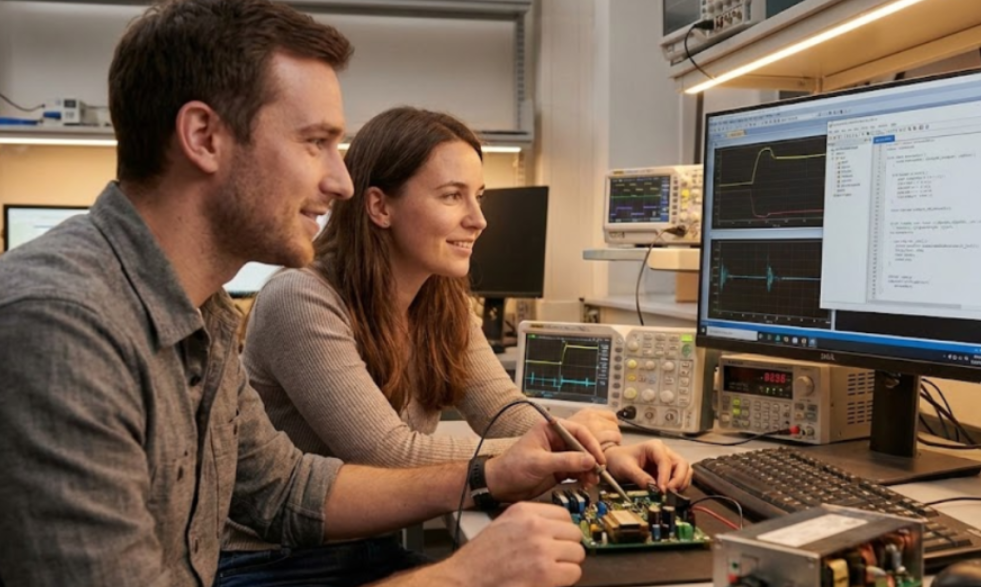
The engineering behind high-performance hardware is a complex discipline that integrates material science, circuit design, and thermal management. Engineers select advanced materials to enhance system durability and efficiency. They apply engineering principles to minimize latency and reduce energy consumption. This intricate balance is crucial for developing innovative technologies. Understanding these components is essential for grasping the future trajectory of hardware advancements. What implications do these innovations hold for the next generation of computing systems?
The Role of Material Science in High-Performance Hardware Design
While the performance of hardware systems is often attributed to architecture and design, the foundational role of material science cannot be overlooked.
Material selection significantly influences hardware efficiency and durability. Composite materials, engineered for enhanced properties, provide critical advantages in strength, weight, and thermal resistance.
Such considerations are essential for optimizing high-performance hardware, enabling designs that push the boundaries of innovation and functionality.
See also: The Economics of Decentralized Systems
How Engineering Principles Enhance Efficiency in High-Performance Hardware
Engineering principles serve as the backbone of efficiency in high-performance hardware design.
Through circuit optimization, engineers can minimize latency and enhance throughput, directly impacting overall performance.
Additionally, a focus on power efficiency reduces energy consumption while maintaining output levels.
Future Innovations in High-Performance Hardware
The landscape of high-performance hardware is poised for significant advancements driven by emerging technologies and innovative design methodologies.
Quantum computing promises unprecedented processing capabilities, enabling complex problem-solving beyond classical limits.
Additionally, neuromorphic chips mimic neural architectures, enhancing efficiency in artificial intelligence tasks.
Collectively, these innovations are set to redefine computational landscapes, fostering an era where hardware can adapt and evolve with unprecedented freedom.
Why Good Thermal Management Is Key to Efficiency
Effective thermal management is essential for optimizing the efficiency and performance of high-performance hardware systems.
Efficient heat dissipation techniques and innovative cooling solutions are critical in mitigating thermal buildup, thereby enhancing reliability and longevity.
Conclusion
In conclusion, the engineering of high-performance hardware is a complex integration of advanced material science, efficiency-driven design principles, and effective thermal management. Notably, studies indicate that optimized thermal solutions can enhance system performance by up to 30%, underscoring their critical role in hardware efficacy. As innovations in materials and engineering practices continue to evolve, the potential for groundbreaking advancements in technologies like quantum and neuromorphic computing remains substantial, paving the way for future high-performance applications.